
I once spent a lot of time with Olympic athletes.
In 2007, the Telegraph magazine asked me to write a series of sports features.
For a year, I met up regularly with six athletes hoping to be part of Team GB. I watched them train, compete and attempt to qualify in the run-up to the Beijing Olympics.
I was in awe of their dedication, their hyper-focus. And of the sacrifices they were willing to make to get to this level. They push their bodies to the limit, and beyond.
But here’s what surprised me most, as someone who knew nothing about elite sport. They push their bodies hard. But then they rest. Almost as hard as they train.
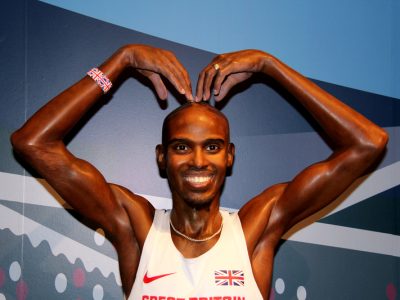
One morning, I went on a training run with Mo Farah.
By which, to be clear, I mean he ran cross-country, while I drove in the car with his coach. Then the coach and I stood chatting, while Farah and his training partner ran round a field several times, then did some timed laps on a running track.
Afterwards, I asked him what the rest of his day looked like. He said he would go home and lie on a sofa with his legs elevated to rest them and everything he needed for the day arranged around him. He would avoid standing, if at all possible. Instead he would read, or watch old races on TV. And he would barely move until the evening, when he’d run a few miles more.
Doing nothing is part of the discipline.
As he explained this to me, his coach nodded approvingly, explaining that the aim wasn’t to get the distance runner to peak fitness for Beijing. It was to build the resilience he’d need to win in the London Olympics, four years after that.
If you’re British, you probably know how this strategy worked out. He won double gold at the 2012 and 2016 Olympics, winning both the 5000 and 10000m running events. Which is why he is now Sir Mo Farah, and a national treasure.
How is this relevant to creative work?
When we do a big push, very few of us build in time to rest and recover. We do a weekend shoot, an evening performance, a big push to meet a deadline – but then we go straight back to trying to reproduce a standard 9-5 day as if it’s compulsory. Even if we work for ourselves.
Yet rest is as important for us as it is for an athlete. You don’t have to earn or deserve it. You don’t have to feel guilty about it. You just need to take it, regularly.
In his book Outliers, Malcolm Gladwell said you need to put in 10,000 hours to truly master a new skill. One of the examples he used was concert violinists.
But what he didn’t see in the data was that the truly world-class violinists were the ones that did practice daily, putting in the hours. But they also broke up their practice sessions with regular rest breaks.
Alex Sooting-Kim Pang pointed this out in a later book, Rest: Why You Get More Done When You Work Less. (If you don’t see the power of rest, I highly recommend reading this – it changed everything for me.)
This doesn’t just apply to violinists.
I’ve interviewed peak performers in many, many fields. What they have in common, almost universally, is an ability to work hard, but also to play, rest, relax.
I remember once being on location for a major TV series, and noticing that amid the bustle, the lead actor was stretched out on a sofa in the middle of it all, fast asleep. I pointed this out to one of the crew, who told me he did it every day, no matter what was happening around him.
Fifteen minutes later, when the scene was set up and the cameras ready, the actor was wide awake, and striding into the same room to deliver his scene with total focus and conviction.
We can’t all take a nap on the job. (Though if you can – why not?) But there are points where I think most of us need rest. And quite a few of us resist it.
After focussed work
After my morning writing session, I have breakfast then try and move for a while. In an ideal world, I go out for a short walk. If circumstances conspire again this, I’ll empty the dishwasher, put a laundry on, do some chores or some stretches before getting back to work.
After a coaching session, I might potter in the garden, read, do more chores, check my email or do some light admin, because I’ve learned from experience that I just don’t have the capacity for anything else for at least 30 minutes.
Whenever I forget this and push on instead, I soon end up procrastinating, scrolling, staring into space, and generally wasting time on trivia.
After travel
Travel can be fun, but it’s also tiring. The noise, the closeness to other humans, just the stress of getting from A to B, arriving on time, they perhaps finding your way to somewhere unfamiliar.
Allow for this. Build in a little decompression time when you get home, or when you arrive at your destination. Whether you’re talking a long-haul flight, a shorter bus or train ride, or a drive – recovery time is important.
After finishing a project
Pause. Celebrate the win, before rushing on to the next thing. Look at everything you created, and put it away carefully in a physical box or folder or a digital one, labelled clearly so you can find it easily should you need it.
As you’re doing this, notice if anything might be reused. Perhaps you have out-takes or research materials that could make social posts or other marketing content when the project is launched. Perhaps you have checklists, models, frameworks, software hints that could be useful for other projects.
Finally, take a break before choosing what you’ll work on next. It will mean you work on what’s important to you, rather than jumping into whatever is in your in-box/on your desk/other people’s priorities.
Even after finishing a shorter task, it’s worth taking a few deep breaths, making sure you’ve put everything away, perhaps standing up or taking a quick stretch. These micro-breaks help you set priorities, rather than getting lost in busywork.
During fallow periods
Creativity has its seasons. And winter always comes around, whether we welcome it or not. When you’re feeling flat, tired, uninspired, remember this. And make space for inspiration to grow.
Read. Listen to music and podcasts. Watch some good films and TV. Meet interesting friends. Go to talks, exhibitions, new places. Explore. Play. Get curious.
Give yourself a little time without needing to be immediately productive. Instead of judging yourself, worrying if your muse will ever return, beating yourself up or grimly trying to push through, unclench. Lean into it for a while.
You’re sowing seeds. Be patient. Spring will come.
After performing
Many of my coaching clients have a warm-up routine before they go onstage or give a presentation. Far fewer have a cool-down routine for afterwards. Explore ways of grounding yourself, letting go of the adrenalin and the stage persona. Some deep breaths, a tight hug, shaking, stretching can all be effective.
Promoting your work is also a form of performance. Of course you’ll be tired after doing a weekend of talks and panel discussions at an event, or a day of podcast appearances and press interviews. Even if it was also fun and validating, you will need recovery time. Allow for it!
After social interactions
This is especially true for introverts, who need time alone to recharge. The day after a party, an event, or anything when I’ve been with a lot of people, I’ll make sure I have an hour to read, go for a solo walk, or listen to music on headphones.
I love seeing my friends, I love meeting new people, and I enjoy coaching or talking to groups. But quiet time afterwards stops me feeling depleted from it.
Over to you now.
Where do you most need to build in buffers, breaks, guilt-free time to rest and recover? What stops you?
Write down your objections/beliefs around this, then question them. Are they really true? What’s the evidence? Is there evidence that the opposite could be true? What could you believe instead? What might change if you did believe that?


What do you think?