
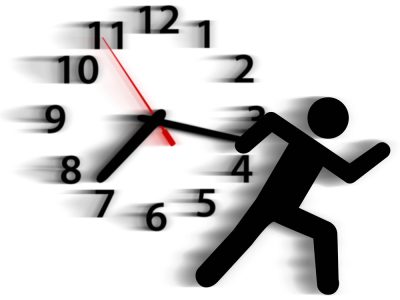
It’s about time.
I’ve had a busy week, with lots of unexpected interruptions.
Some were lovely. An old friend arrived at short notice for an overnight stay; a sunny evening led to a spontaneous drinks party on the beach. (And a little bit of a woolly head the next day.)
Others were not so much fun. Various crises involving my elderly mum; a major admin headache, which hinged on a computer error at a company I use regularly, and took hours to unravel.
I seriously thought of skipping this week.
I doubt you would have noticed. But here’s the thing: it matters to me. Writing these posts, every week, is a commitment to my own writing practice, as well as to the brilliant creatives who read them.
We often think we don’t have time for the things that are important to us. Especially when it comes to our creative work, or growing our business so it supports us.
“I don’t have time” is a 21st century mantra. Notice how often you say it this week – or others say it to you. Then decide what you want to do about it.
- You can back out of the commitment. (No is always an option.)
- You can postpone your project because you are over-loaded.
- Or you can make the time.
If you choose the latter, here are some things I had to remind myself, this week.
The conditions don’t have to be perfect.
Working in busy magazine offices, I learned to tune out the noise and focus in when I needed to write. I didn’t have a choice. Often, I was writing to quickly fill a gap, and the alternative was going to press with a blank space.
Whatever your creative field, this is a skill you can develop. But it’s also a skill you can easily lose.
When I went back to freelance writing from home, I soon decided that I needed hours of uninterrupted time to write, and at least an hour of making coffee, tidying up and other procrastination activities before I began.
Then my son came along.
But the bills didn’t stop – nor the deadlines. So I trained myself once more to focus, to work in the rare slivers of time when he napped, or when he was occupied by something else.
His favourite Disney film was 101 Dalmatians. Many of my Sunday Times features in the late 90s were hand-written in front of the TV, while Cruella De Vil menaced puppies yet again. They were then typed up and delivered late at night, once my son was in bed, or his dad was home.
Now I’m adapting to a new challenge. Working while supporting an elderly parent who is in and out of hospital constantly; loses track of time and wakes us up in the early hours with phone calls; and often forgets something that was settled at length the day before, needing to go over it all again.
Life will always get in the way.
So perhaps we should reframe it. Our work and our lives are not separate things. They are woven together.
Creative work is a big part of our life; our family, our friends, our pets, our home, our other interests and commitments all make the work richer. They feed each other, they inform each other, they are interconnected.
Perhaps if we accepted this, we might embrace interruptions. We could enjoy the good ones fully, and give the more challenging ones the attention they need as they arise.
Once we accept that conditions will rarely be perfect and there will always be something that gets in the way, we can also be more mindful about protecting some regular time for our creative work.
We don’t always need a long stretch of time.
10 minutes is plenty to make a quick sketch, to bullet-point an idea, to get a few words down, a riff, an idea. Or to make a minor tweak to your website or proposal.
30 minutes is enough to rough out a few hundred words, to work on a detail, to choose one of your rougher sketches and explore it a little more. Or just get some admin off your plate to free up more time later.
An hour will enable you to do some deep work, and really get into flow. Put in an hour a day, and you’ll see real progress on a project. And if you think you don’t have that hour – check your phone time, how much you’re watching on TV. Or talk to the people you live with and see if they can help you free up that hour by taking on the school run, chores, meal prep – whatever saves you that hour. As a bonus, you’ll be nicer to live with if you get this. Because you’ll be doing the thing that makes you more.. you.
Four hours of focussed work is the most you can expect to do in an average day. Even if you don’t have a day-job, or any other distractions or responsibilities. When you look at the routines of famous creatives, or the scientific research into deep work, this is a recurrent theme. Four hours – and most of us will need two or three breaks in that time, to keep our attention from wandering.
There will be days when you need to do more.
A long shoot, a tight deadline, a big push to get a project to its next stage.
When you do work long hours, schedule in recovery time afterwards, if you can. Otherwise you will burn out. Then you won’t make anything at all.
There will also be days when you’re totally inspired and will want to do more. Those days are magical. Enjoy them when they come.
But don’t rely on them. And certainly don’t expect them, and feel like you’ve failed if every day doesn’t work that way.
Embrace incrementalism.
Work in brief, regular sessions, and you’ll produce more than working in long, frantic bursts. It’s more sustainable. You’re training your brain to focus regularly and get into flow – and you’ll find that ideas and inspiration show up more regularly, too.
Racing to completion, pushing too hard can actually impede progress.
Long, intense sessions of creative work also lead to procrastination because you learn to hate the process. If it’s always gruelling, if it never has a clear end point, why would you ever want to begin?
There’s proof this works.
Academic writing is interesting, because unlike a lot of creative output, it can be measured fairly objectively. Papers are usually peer-reviewed, and won’t get published unless they attain a certain standard.
Most academics keep publishing throughout their career, so it’s possible to examine their working practices, and measure that against output.
Research by psychology Professor Robert Boice showed that academics who took weekends off and wrote for somewhere between 10 minutes and four hours every weekday actually produced more published work, over time, than academics who worked much more intensively.
Stopping after the allotted time cultivates patience, and trains you to return to the project again and again, creating a career-long habit of productivity.
Test this for yourself.
Next time you find yourself saying that you don’t have time, stop. Take a beat.
Ask yourself if that’s really true. Then see if you can steal some time, in your busy day, for your creative practice.
Write. Paint. Sew. Dance. Cook. Play. Sing. Make. Design. Sketch. Style. Think. Dream. Practice. Do your verbs.
It all counts. And it adds up, over a lifetime, to something much more substantial.
Writing this took 45 minutes.
It will take another 10 minutes to get it onto the page, in my website. I made the time – and now you’re reading it.
If you know someone who might find this useful today, please share it with them. And if you got this because a friend forwarded it to you, click here to get Making It, my newsletter about creative work, every Friday.



What do you think?