
Creative work has changed a lot in my lifetime.
When I started out in journalism, I would get the bus into central London and walk down to the New Musical Express office in Carnaby Street to pick up the album I’d be reviewing that week, or tickets for the gig I was reviewing. A few days later, I’d make the same trip again to drop off my copy.
This was labour-intensive, but I had time in those days. I was a student, supplementing my grant with As we freelance music writing. (Yes, younger readers – back in the 1980s, you were paid to get an education. Or helped, at least. Weird, no?). It also meant I met my editors, was able learn from them, and built lasting relationships some of which lasted my entire career.
Slowly, things got more sophisticated.
When working for daily newspapers who needed a review more urgently, I would phone in to dictate my words to a copy-taker – a long, laborious process usually made even longer by a Londoner finding it hard to decipher my broad Birmingham accent.
Then an amazing new technology changed everything.
By the time fax machines became affordable, I was editor of The Face magazine. And it felt like a miracle. Suddenly the steady stream of bike couriers delivery copy to the office dried to a trickle. Copy, information, even rough versions of photographs could arrive instantly from all over the world, without the admin or the cost of expensive delivery services.
For a while, it felt magical, miraculous.
It saved so much time. But soon there were consequences we couldn’t have foreseen.
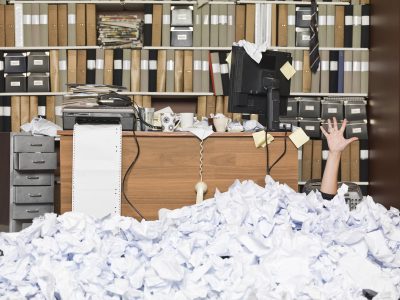
Gradually, more and more people acquired the office fax number. PRs would send unsolicited 50-page press releases about films, or entire world tour dates of a band we had no interest in. The floor was littered with unwanted information, and I was often on my hands and knees in the middle of it, looking for a two-page fax from a freelancer with copy I urgently needed.
Meanwhile, our tiny team would gather round the fax, arguing about who needed to send or receive something most urgently. Inevitably, when it came to your turn, the paper roll would run out, and by the time you’d changed it, another unwanted press release would come through, stopping you from using it once more.
So when email arrived, it felt like a fresh miracle.
It wasn’t instant, at first. You had to connect to a temperamental dial-up modem to download and send your new messages. But it was quicker and easier than a fax, and it improved quickly.
Soon, people declared, everyone would have an email address and offices would be paperless. But this didn’t make life easier. (Nor did it really save paper.) Instead, it removed more layers of friction.
When you can copy the entire staff into a memo in just a couple of clicks, that’s what you do. Whether it’s relevant to them or not.
When a PR can bombard thousands of journalists with information at virtually zero cost, they do. Even if the story isn’t suitable for your publication.
Once communication was instant, people also started to expect instant answers. And suddenly all of the time email had saved was spent.. processing email.
Then the pace of change got faster.
As the technology advanced, we became accustomed to having words, then images, music and films available instantly. Soon smartphones made it possible for us to create and share our own content, just as easily.
Now we’re all available to everyone, 24/7. We don’t ever leave the office: we carry it about in our pocket. And we’re running our own personal brands across multiple channels, mining our lives for content.
“All I ever wanted to do was write,” one of my author clients lamented recently. “But now I’m CEO of a multi-media company with newsletters, podcasts, a YouTube channel, all marketing my books.”
Processing information takes time.
Opening and processing my mail at The Face in the 90s took about an hour. A decade later I was at The Observer, and I couldn’t have read and digested the hundreds of emails I received even if I had all day to do it.
Today we’re all drowning in information, constantly feeling behind. We are fielding messages by email but also by text, social media DMs, Slack and a million other channels. Many office workers spend most of their day simply trying to keep on top of it all, cramming the work they’re actually paid to do into evenings and weekends.
And now we have AI to contend with.
And yet another layer of friction has been stripped away. With generative AI, you don’t even have to write those memos, press releases, emails, social media posts. Or design them. So we’re all facing a tsunami of slop.
We’re now scrolling through our social feeds to find something that feels human, or endlessly skimming through messages that look like an important memo, sound like they might have information we need – but often doesn’t. There’s already a new term for this new deluge of pseudo-information: workslop.
Oliver Burkeman noted this problem in his book 4000 Weeks. Technology is created to solve problems, to make life more convenient, to reduce friction. And it often does, at first. But then we adjust:
“The technologies we use to try to ‘get on top of everything’ always fail us, in the end, because they increase the size of the ‘everything’ of which we’re trying to get on top.”
So what can we do about this?
First, we need to decide what’s really important. This will be different, for all of us. But this will always be true: You can do anything, but you can’t do everything.
You have to choose. And ruthlessly cut out all the distractions, busywork, the shoulds, oughts and musts so you can focus on the things you want to do.
Real productivity isn’t about getting more efficient, doing more and more. It’s about doing what matters most, the work that is meaningful to you. If technology helps with that, great. But assess regularly, and check if it’s still working for you – or if you are now working for it.
As Nassim Nicholas Taleb says in his book Skin In The Game : “Anything you do to optimise your work, cut some corners, or squeeze more ‘efficiency’ out of it (and out of your life) will eventually make you dislike it.”
Put it this way. At the end of your life, what will you regret more: Not answering more email and posting more often on Instagram? Or not making the work you wanted to make, not spending more time with friends and family?
How to take control of your technology.
A few suggestions:
- Schedule regular time for creative work. Don’t try to clear the decks before you begin, or wait for time to magically open up. Make the time. Put it in your calendar and protect it, fiercely. Treat it like you would an important meeting. After all, what could be more important – and human – than your creativity?
- Eliminate distractions. Do your chores before or after your creative time. Leave your phone in another room. Switch off distracting apps and alerts. Block the internet or turn off your wi-fi if needs be. Give yourself time and space to think.
- Restrict the information flow. Unsubscribe from as many newsletters, message threads and unnecessary marketing emails as you can. Ask not to be cc’d in on communications that aren’t directly relevant to you. Set fixed times each day for checking messages and replying, and don’t look at your email or other messaging channels in between these times.
- Edit your channels. Are you trying to be everything, everywhere, all at once? If you’re on all social media channels, does this work for you? Is it bringing you the work, the income, the audience you want? Assess what works best for you, what brings you the work, the income, the audience you want – and focus on that.
- Assess your tools regularly. Is this tech saving time, or creating new problems? Has it made your life or your work easier and more enjoyable – or harder? Is it still serving you, or are you now spending increasing amounts of joyless time servicing it?
- Go analogue. For at least part of your day, disconnect. Look away from screens and enjoy the real world instead. Chat to a friend. Play with a child, a pet. Go for a walk, or potter in your garden. Write or draw by hand. Read a book. Listen to music. Look at a tree. Move your body.
- Embrace inconvenience. The shortest, easiest route isn’t always the most fulfilling – or the most effective. Meeting just a few people face-to-face might generate more work than posting to thousands of followers. Going to the shops instead of ordering online might create a welcome break in your day. Going for a walk or reading might inspire you more than scrolling.



You’re far from alone in this, Lynn. It’s a big thing for me – and for many of my coaching clients.
Very helpful, making me feel seen as a creative who’s been around before the internet and has been feeling overwhelmed by it. Thanks for helping me to feel seen…not crazy lol…and for offering good, practical tips!