

You probably procrastinate at times.
Most of us do. You’re human, and it’s a natural reaction to tasks that are difficult, boring, uncomfortable or lacking in immediate rewards.
But for some of us, it’s become an ingrained habit. And as a former chronic procrastinator, I know what a problem that can be.
These are the books that helped me most when my procrastination was at its worst, and that have helped me in the years since then. If procrastination is holding you back, take a look and choose the ones that seem most relevant to you.
But don’t just read them. (That’s just procrastination in another guise.) Do the exercises, follow some of the suggestions. They’ll get you back into action!
1. Procrastination Decoded
This book by Dr David Maloney is, I think, self-published, and full of typos. Nonetheless, I found it transformational.
Perhaps it just came at the right time for me, but it helped me change the stories I was telling myself about work; to start planning fun things first, instead of working until I felt I ‘deserved’ a break (no wonder I resisted starting work!); and to break my day into much more do-able 30-minute focus blocks, instead of long stretches of gruelling work.
2. Solving The Procrastination Puzzle
Written by Timothy Psychl, a retired psychology professor who specialises in procrastination, this is a blessedly short primer for understanding our self-sabotage, then getting unstuck.
If you’re not a big reader, this gets the basics across clearly and efficiently. You might also find help in his podcast iProcrastinate, or his deep dive on procrastination on YouTube with Ali Abdaal.
3. Procrastination: What It Is, Why It’s A Problem, And What You Can Do About It
Fuschia Sirois is another academic specialising in procrastination. I found this one really useful. Like Psychl, she believes procrastination is at root about our inability to cope with unpleasant or uncomfortable emotions. She lays out the brutal cost of procrastination on our health and well-being, and offers lots of practical strategies to try.
If you’re a chronic procrastinator or you’ve been putting things off for a long time, these first two books will help you understand how the human brain works, why we avoid aversive tasks, and what triggers this avoidance.
You are not broken, or lazy. You are human. Understanding this and forgiving yourself for it is a huge step towards defeating procrastination for good.
4. How To Do Things: Productivity for the Productivity Challenged
David Cain writes the brilliant Raptitude blog. He also created this purposefully short, actionable book that is particularly good for ADHD brains, and for people who have tried other productivity systems and failed.
It boasts that it can be read and put into action in an hour. I found that to be true. If you don’t want a complicated system, lots of exercises, and a long read, start here.
5. Atomic Habits
Procrastination is a habit. And a particularly nasty one, as it stops us doing the things we really want to do.
James Clear’s book on making and breaking habits has quite rightly become a classic.
Clear by nature as well as by name, he lays out simple but powerful strategies for doing more of the things you want or need to do, and less of the things that get in your way.
6. Tiny Habits
BJ Fogg is another academic who has studied human behaviour closely. About small, manageable behaviour changes that make a big difference, this is another useful tool for procrastinators.
For me, curing my chronic procrastination was more about making lots of small, manageable changes than grand gestures.
7. Slow Productivity
Cal Newport’s book Deep Work was one of the first to take note of the busywork and the endless, shallow distractions the digital world provides us with. And to offer practical ways to combat that.
He’s continued to think and write intelligently about work, productivity and distraction ever since. Packed with interesting stories and examples, his most recent book emphasises three key principles designed to help us let go of trivia, and focus on what’s really important:
- Do fewer things
- Work at a natural pace
- Obsess over quality.
Focus on the first two if you’re a procrastinator. Once you’re doing less and stop pressuring yourself to do it faster, the rest will follow.
8. Eat That Frog!
Brian Tracy’s best seller offers exactly what it says in the subtitle: 21 great ways to stop procrastinating and get more done in less time.
There’s nothing earth-shattering here, and probably very little you don’t already know. (Plan; prioritise; do the hardest thing first; the 80/20 rule; don’t multi-task.)
But this is an easy read that pulls together a great list of ideas for getting on and getting the job done.
9. Mind Management, Not Time Management
David Kadavy is a writer, so he understands the challenges of creative work especially. He also understands that it’s often not about managing your time but your mindset. You often have time to do the work you’re avoiding; you just don’t want to.
Reading this gave me more insight on what kind of work to focus on and when, how to create the mindset it needs, the power of tiny goals and lots more. If you write or do any other kind of creative work, you’ll find it useful.
10. Keep Going
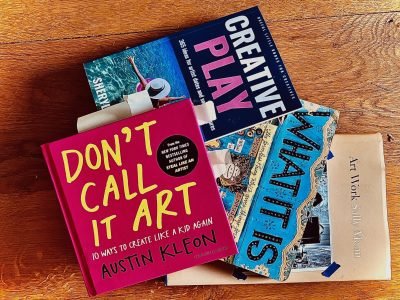
I love Austin Kleon’s daily blog, and his wonderful little books on creative process. Keep Going is kinder, gentler in its approach than the somewhat macho War of Art. It urges you to build routines that support you and learn to play as well as work.
When procrastination creeps in, I open this at a random page. And I’ll often read exactly what I need to get back into action again.
But if you can’t get going at all, try his first book, Steal Like An Artist. And just find some wonderful things to inspire you. Then copy and combine them. You’ll be making something new and original before you know it!
11. The War of Art
An author and screenwriter, Steven Pressfield writes about the daily battle creatives need to do with the force he calls Resistance. I tend to call it fear. Either way, it’s a constant companion for anyone who makes creative work.
It shape shifts constantly, but it never goes away for long. Creative work is hard, and whenever we’re facing something difficult, Resistance is there.
But every day, we get to choose. We can give into it, and procrastinate endlessly. Or we can expect it, decide in advance not to give it to it – and so make the work we want to make.
Pressfield’s basic message is, “Man up, be a professional – and just get on with it.” So it’s not great if you’re totally stuck. But it’s a rousing call to arms nonetheless, and good to dip into when you’re flagging on a project.
12. Finish: Give Yourself the Gift of Done
Jon Acuff uses humour to attack perfectionism in all its many guises, showing how it keeps us procrastinating and never let’s us finish anything substantial.
I particularly liked his thoughts on Hiding Places (weird side-projects that suddenly become really fascinating and absorbing when we’re avoiding a more important task), and what he calls Noble Obstacles.
These are lofty, rational-sounding reasons why you can’t move forward, such as reading hundreds of books as research before writing anything yourself, or needing to find the perfect exercise programme before you work out even once.
These are some books I’ve found useful.
Are you a procrastinator? And are there other books or resources that have helped you deal with it? If so, do leave a comment and let me know!
You might also like these posts:
Stop procrastinating! If you just can’t seem to get started, here are 20 strategies to try.
- Why do we procrastinate? Understand the triggers that lead to procrastination – and how to change them.
- Still procrastinating? Some questions to help.
PS: Most of the links above take you to Amazon. If you choose to buy there, a few pennies come out of Jeff Bezos’ pocket and into mine to help with the costs of running this site. But if you can support your local bookshop instead, more power to you!


What do you think?